
Seville surprised us with not only its character, but also its spirit. The grace and sensuous feel of Granada exploded into a well-dressed party in Seville. Andalusian culture, history, and traditions are a celebration.
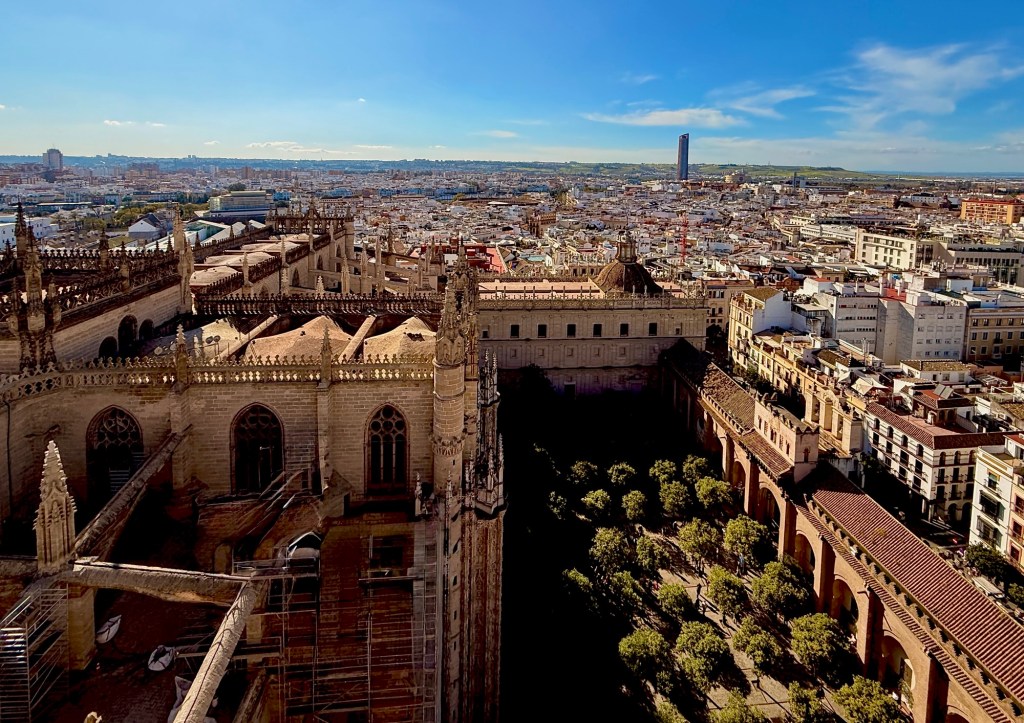
Seville is a festival waiting (or not) to happen. Semana Santa is approaching soon as Easter nears. Centuries-old brotherhoods known as hermandades are preparing for the ceremonies. Band members smartly dressed in navy uniforms with crisp cuffs with gold braiding hustle through the streets carrying their instruments to join rehearsals for the pasos, when each group will usher their elaborate floats through the narrow streets of Seville.
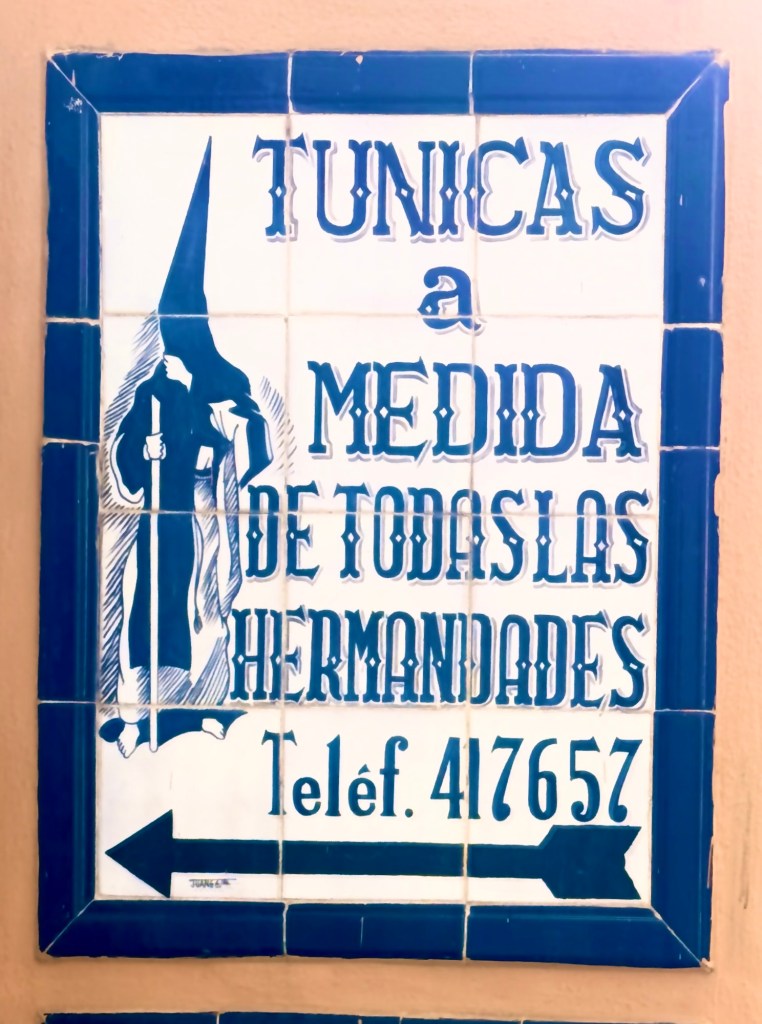
Members will take the roles of Nazarenes, penitents wearing the capirote (pointed hoods that startlingly resemble Ku Klux Klan garb, but signify their repentance). Small storefronts have cone-shaped headpieces to fit and linen hoods for sale, with lines forming to purchase them. Pastry shops display wine-soaked French toast and other treats specific to this feast.
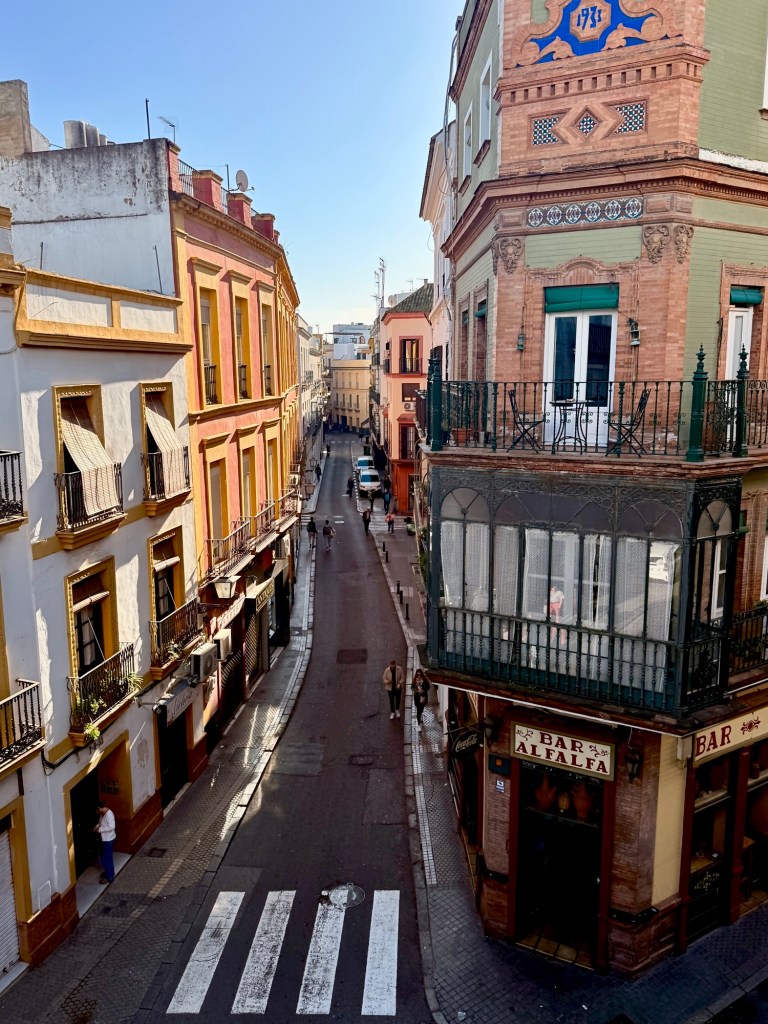
Our apartment view — Alfalfa Neighborhood
Soon following Semana Santa is the Feria de Abril. This week-long celebration of flamenco, horses, music and parties fills the city. Dress shops are bursting with brightly colored flamenco dresses. Men’s shop windows display equestrian attire with felt Cordoban hats and short-waisted coats. During the festival, tents are full of food and drink, music, and dancing. Even weeks before, the locals are preparing, and on Friday evening these shops were bustling.
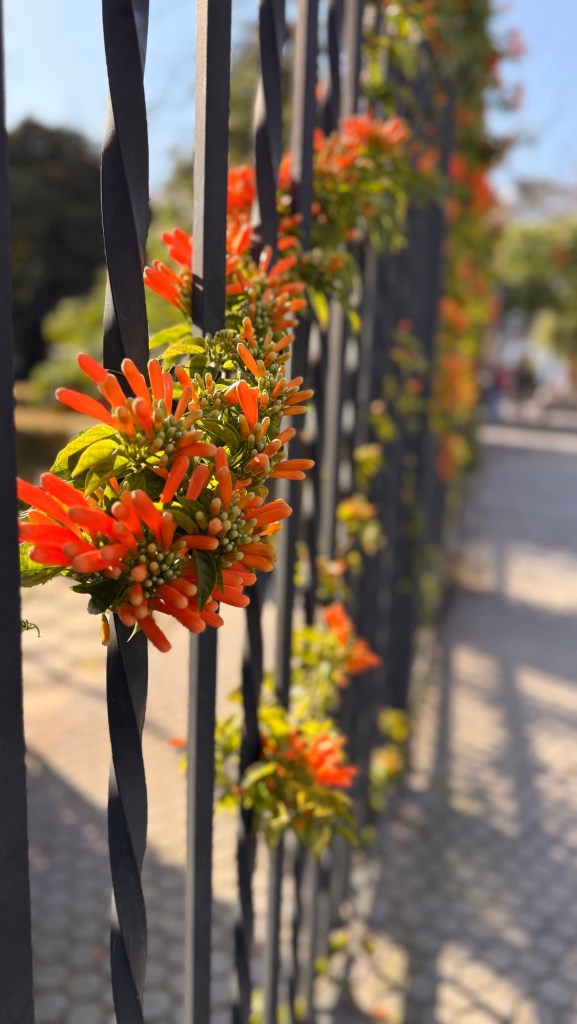
February in the parks — and already blooming
Seville is a beautiful backdrop to a world of imagination. Many operas have been set in Seville, as its gardens, balconies, and palaces offer inspiration for stories of love and intrigue.
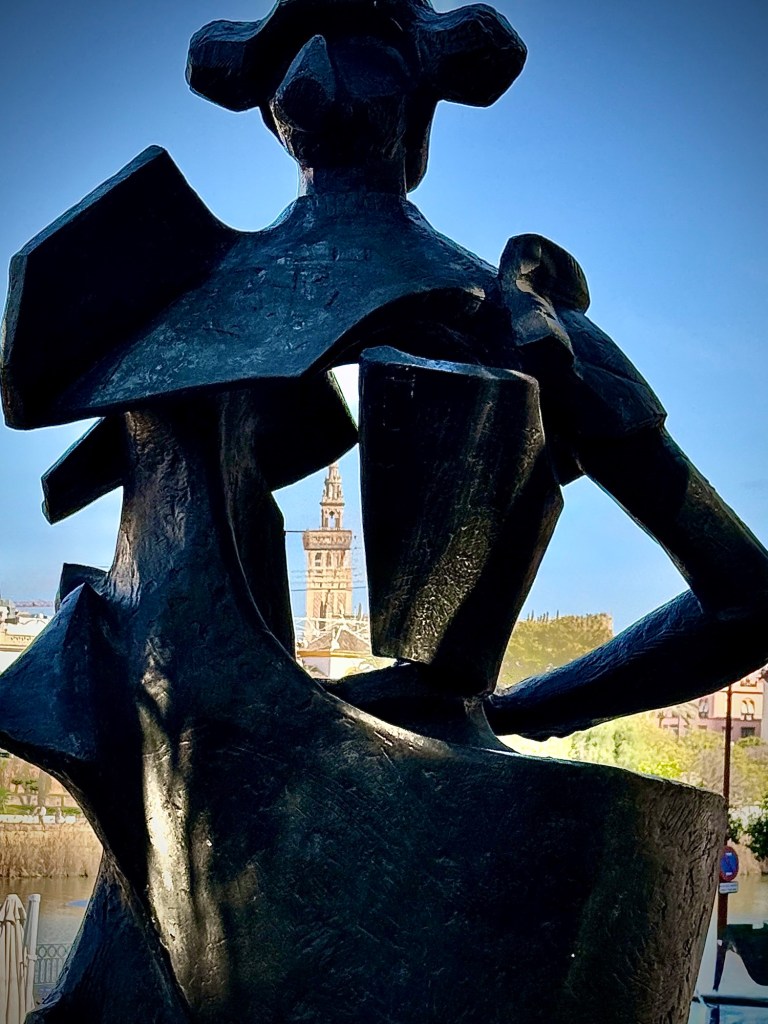
A silent statue, but the city hums
On a walking tour of the off-the-beaten-path sites, we heard stories of actual intrigue and betrayal immortalized in stone and statue. At the river’s edge, the bullfighting arena is sprucing up for a new season. The age-old pageantry will begin its new season on Easter Sunday.
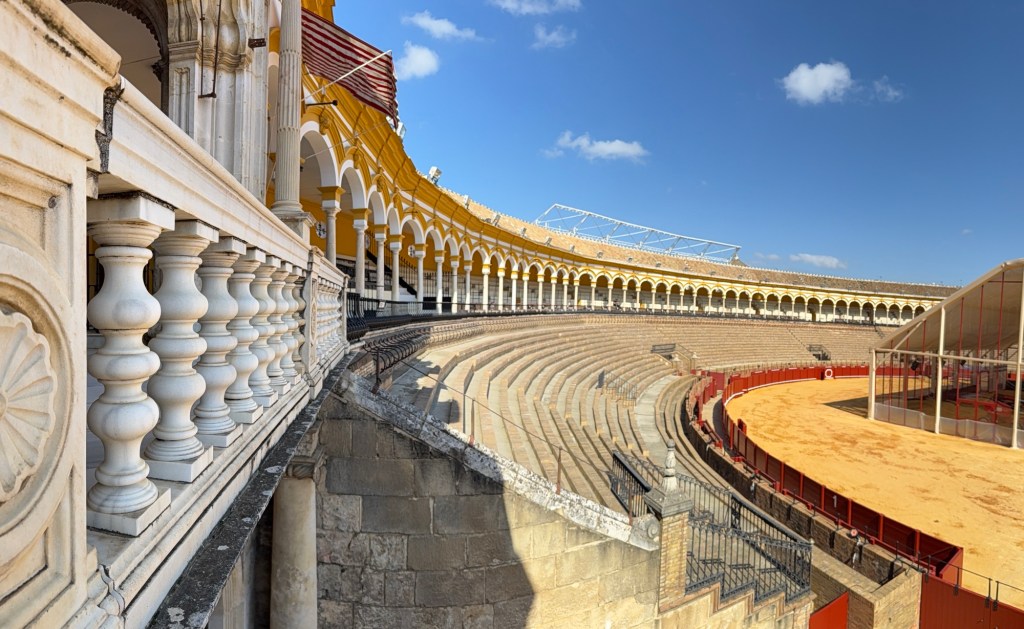
The bullfighting ring of Seville — bold, bright, and steeped in history
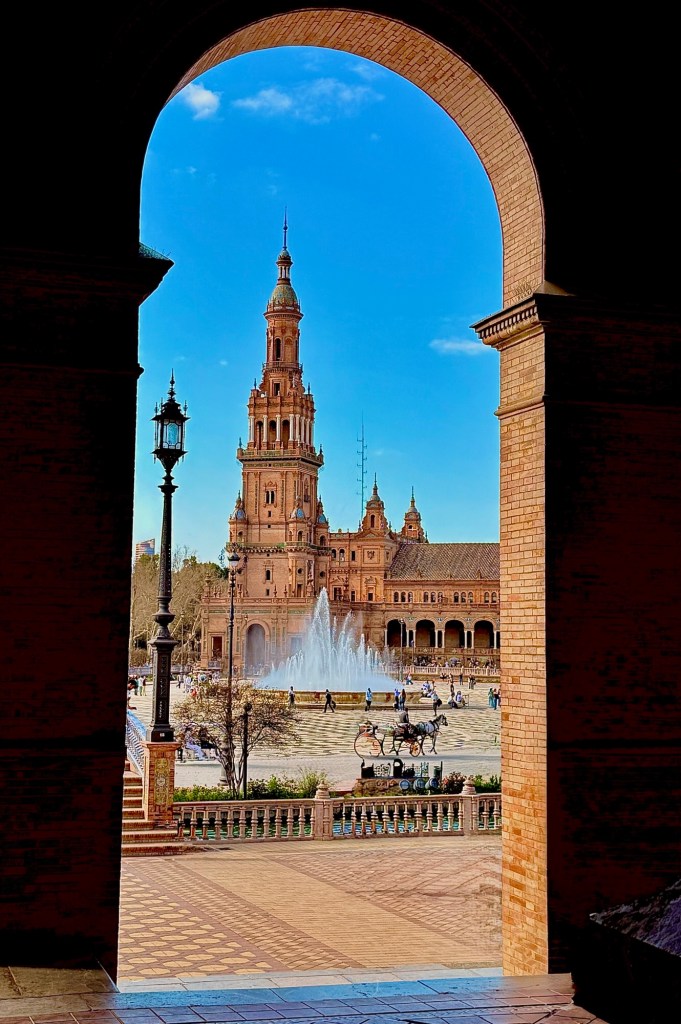
We visited Plaza de España and it felt less like a plaza and more like a statement.
Expansive and theatrical, it sweeps outward in tile and terracotta — confident, celebratory, unmistakably Andalusian.
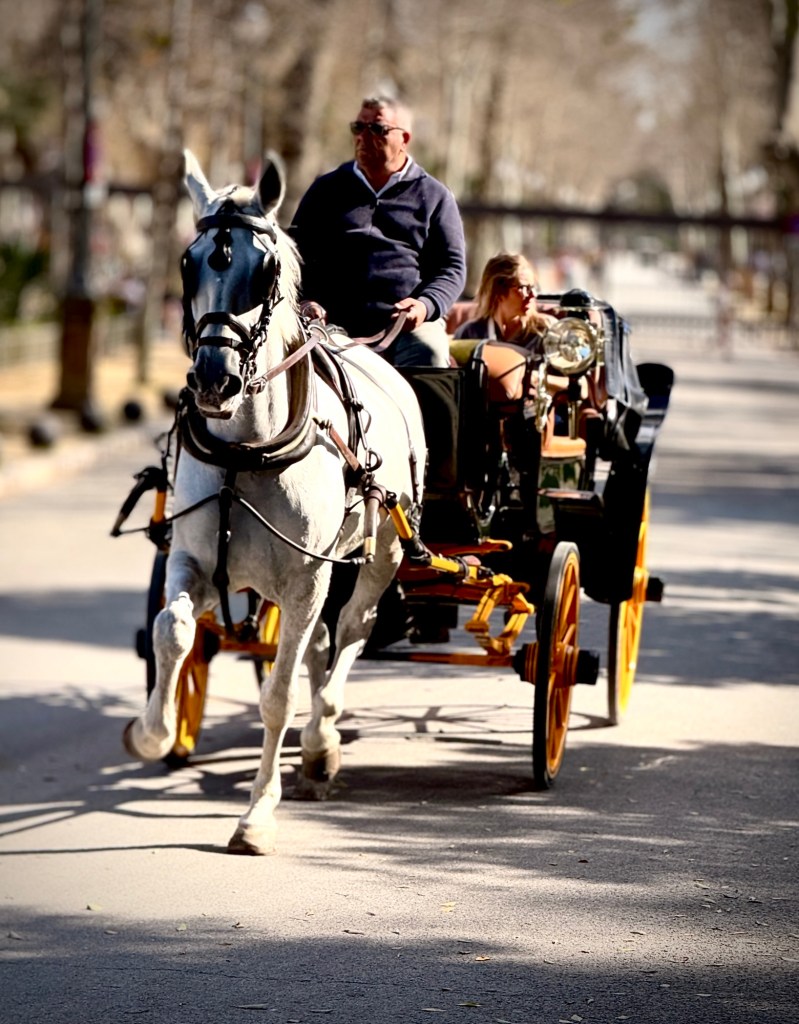
Seville doesn’t rush — it glides
Horse-drawn carriages can be heard clip-clopping on cobblestone streets through the city’s historic center and over to the Plaza de España. It’s no wonder there is a thrumming of mystery in the streets of Seville.
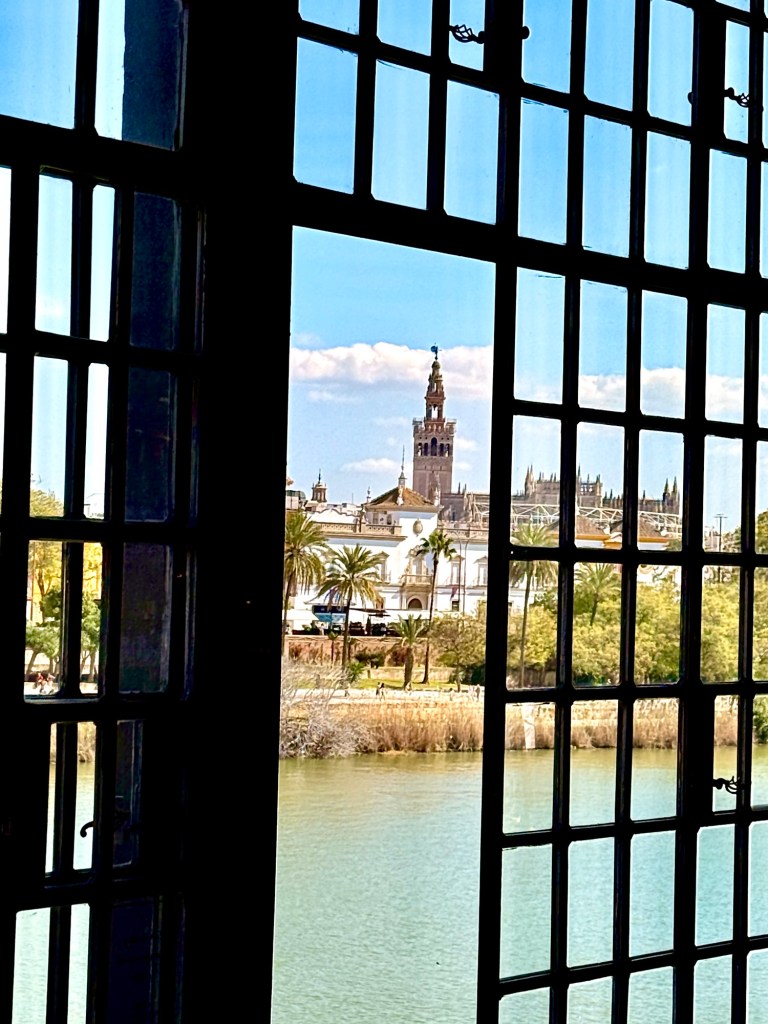
Just across the Guadalquivir River
Crossing the river on a Sunday, we were able to peek into Seviano life. The oldest active church, Cathedral of Santa Ana, was vibrant as families with young children attended mass.
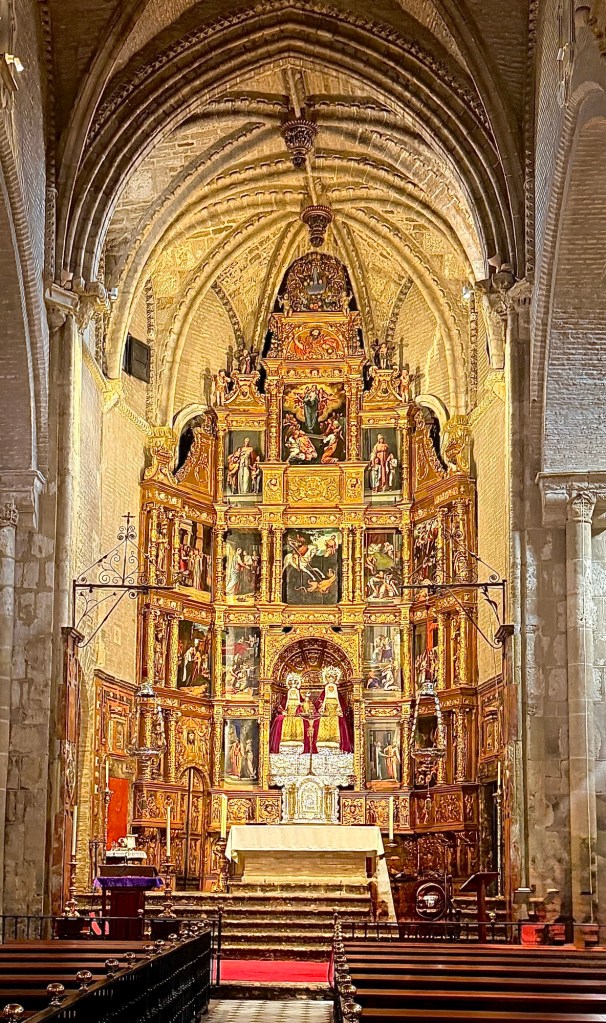
Santa Ana — Triana’s cathedral of the people
Ladies were preparing the church for the Palm Sunday Mass weaving crosses out of Palms. After Mass, the town was buzzing with pedestrians, in their Sunday best, strolling the avenue. Abuelas we’re escorted by their adolescent grandchildren, Abuelos strolled arm in arm with grandsons. Restaurants created long tables where families met for a repast. Lines at the gelaterie spilled down the side walk. Everyone was there to see and be seen.
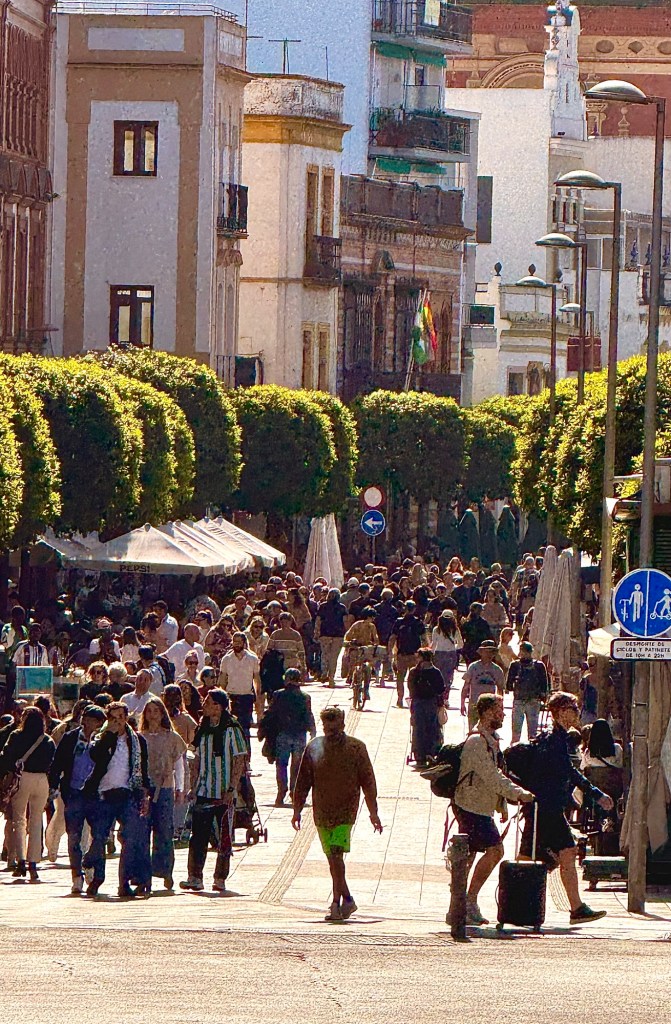
In Triana, life spills into the street
If Granada felt intimate and poetic in our earlier reflections — a city of hushed stone passageways, mountain air, and flamenco echoing from cave walls — then Seville reads like a bold exclamation point. Granada whispered; Seville sings.
Seville is a city where tradition and daily life blend seamlessly — solemn and celebratory all at once. Where Granada invited reflection, Seville bursts with pageantry and rhythm. Here, the past is not remembered quietly; it is lived out loud.

 Maureen and David’s Travel Blog