
Barcelona is a city like no other. The Catalan heritage and language are still vibrant here. The tapas culture provides an electric current to the bar and restaurant scene late into the evening.
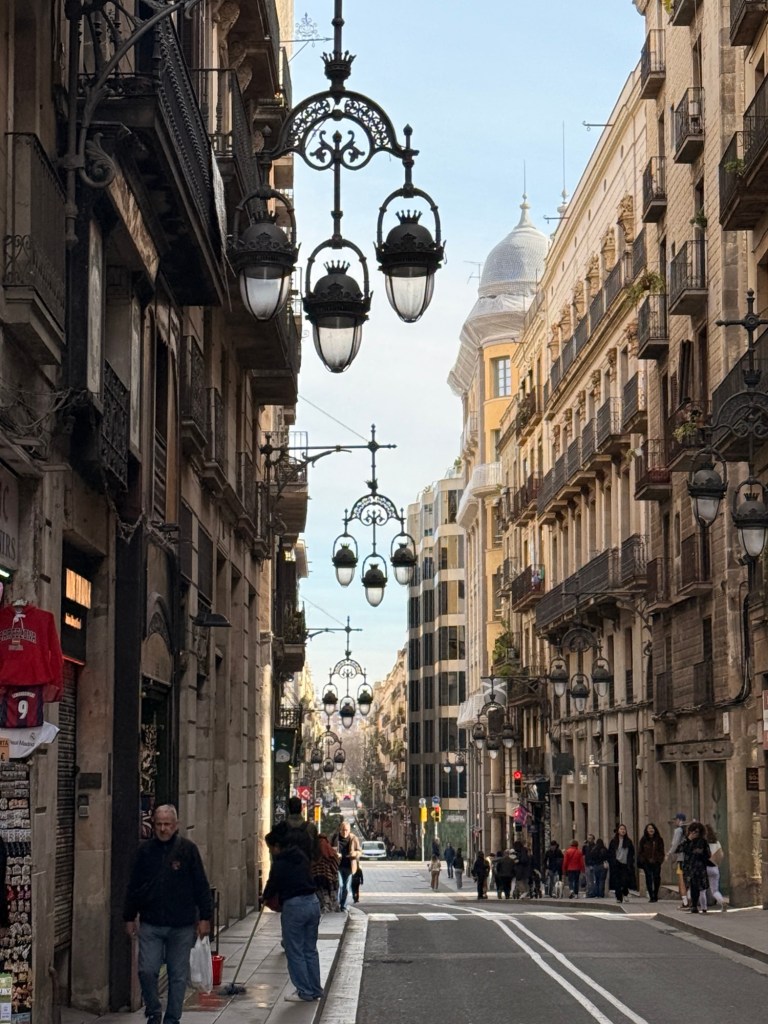
Wrought-iron lanterns and timeless facades — wandering the elegant streets of Barcelona’s old city.
The old city has its share of wide boulevards lined with edifices featuring wrought-iron balconies and stone façades. Narrow, winding alleys evoke romance and intrigue, spilling out to the signature statement of Barcelona — all things Gaudí.
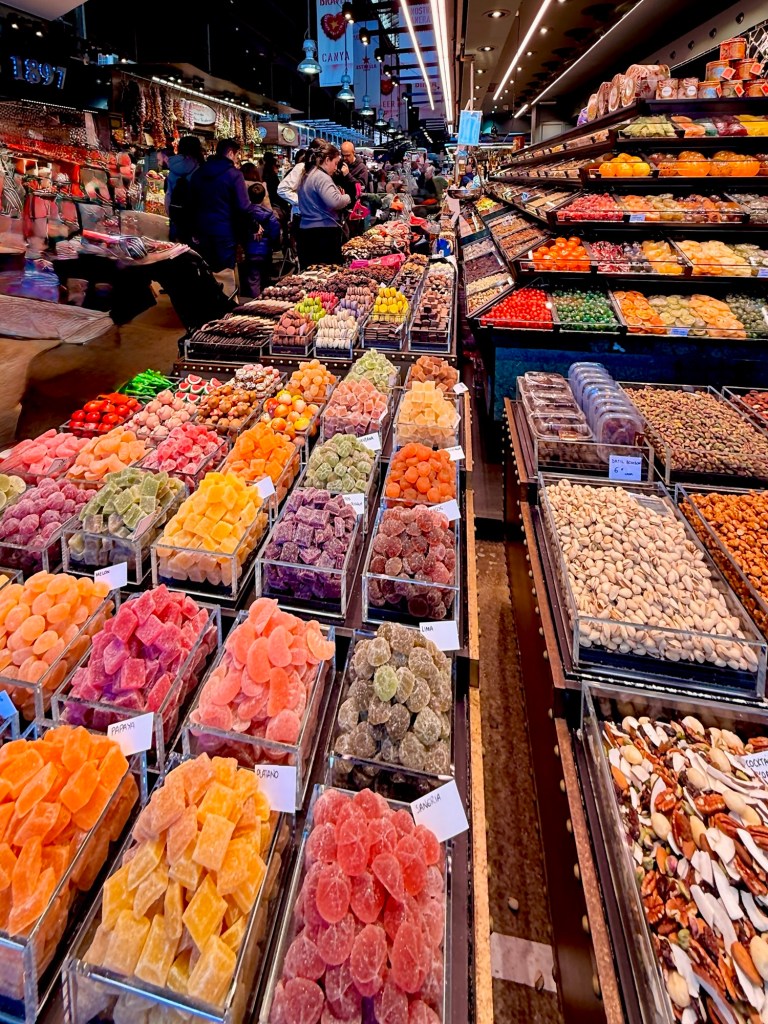
Where Barcelona tastes like candy at Boqueria Market
Antonio Gaudí, architect and influencer of all things Modernisme, explodes onto the vibe of Barcelona, as relevant today as he was 100 years ago.
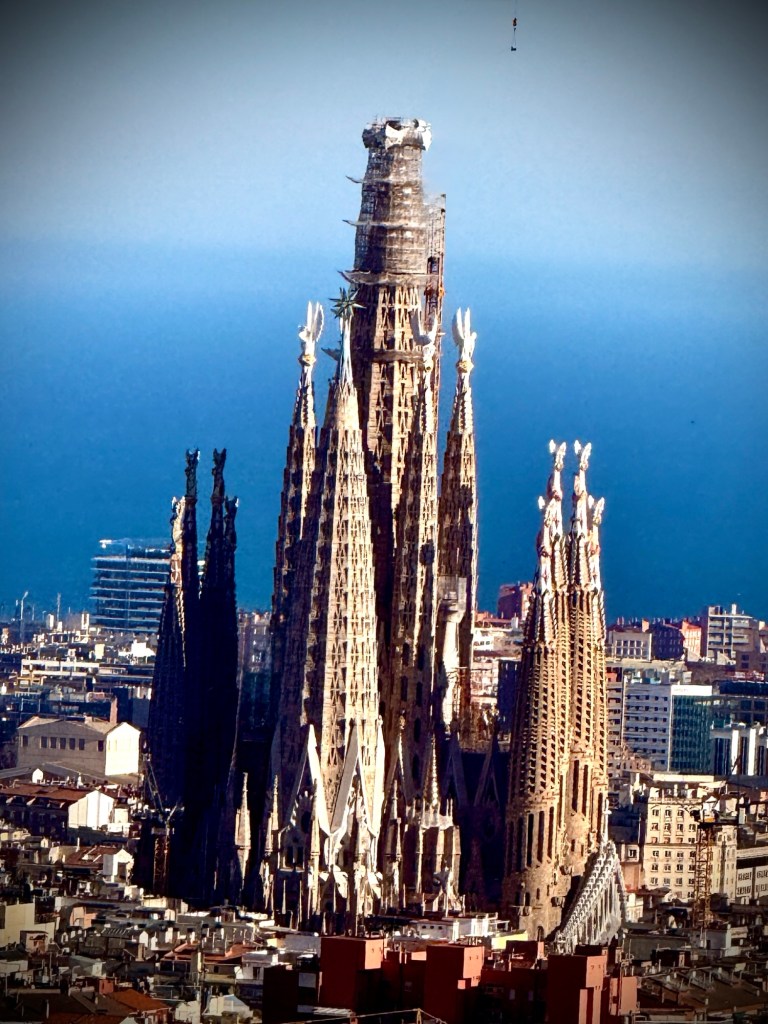
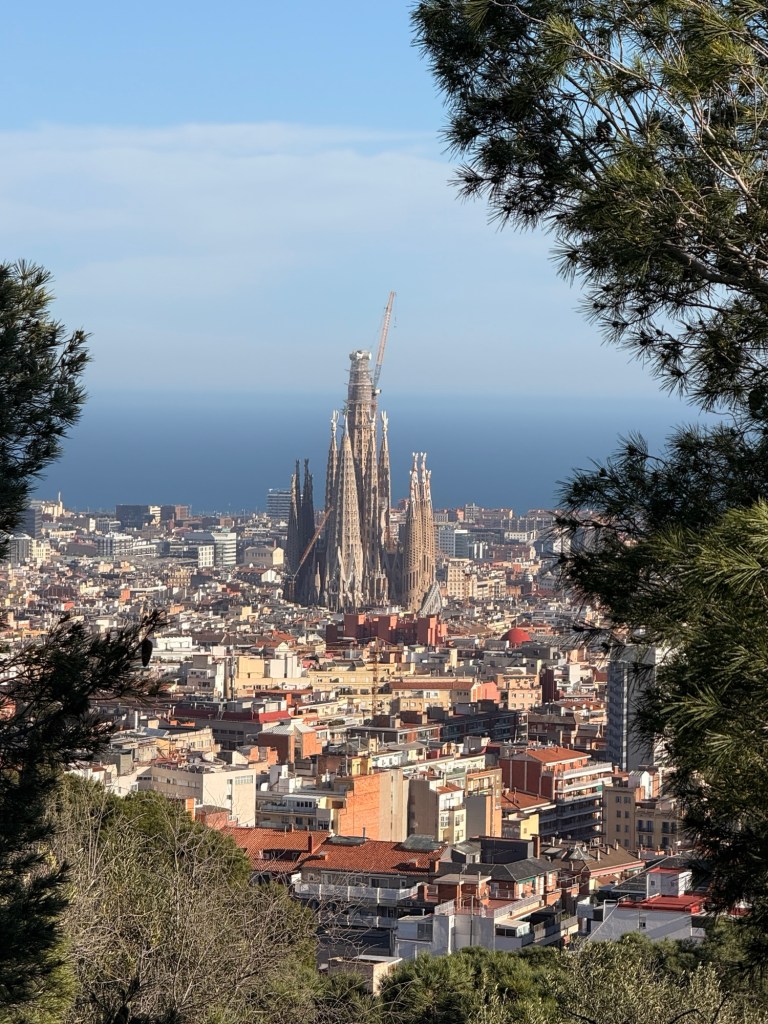
Soaring above the city skyline, the timeless majesty of Basilica de Sagrada Família
The Basilica de Sagrada Família will, in theory, come to completion this June in concert with the 100th anniversary of the death of its famous architect. This is part of the myth that writes the legend that is the story of the building of this basilica.
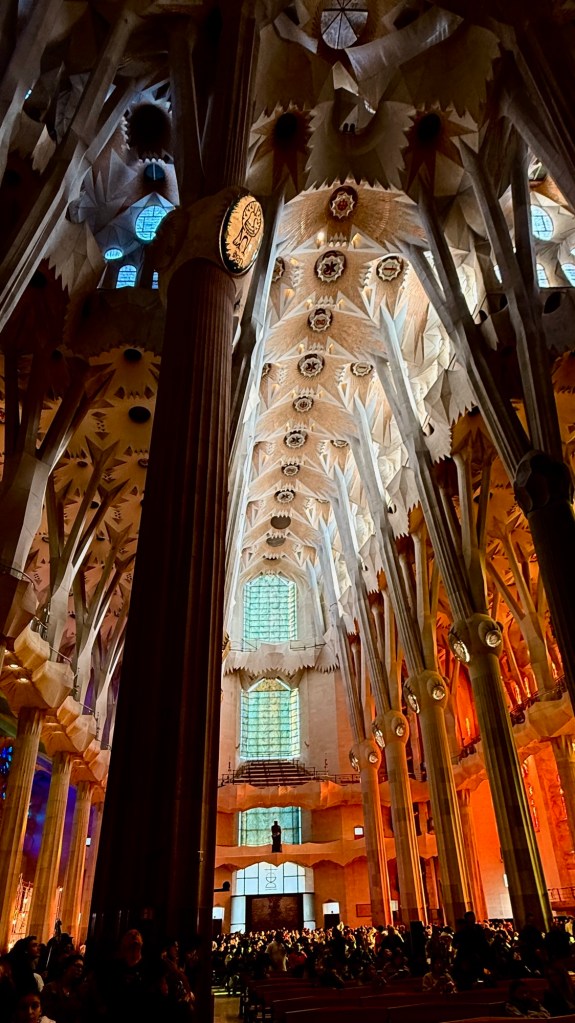
Columns like towering trees,
light like stained-glass fire
While many Gothic cathedrals worldwide began as a commitment by the faithful to establish a sanctuary they would never see completed, the birth of the Sagrada Família is shrouded in destiny. While the preliminary plans were begun with a known architect, within a year they were abandoned, and in a dream, the major fundraiser saw a young blue-eyed, redheaded man who would see it through (sort of).
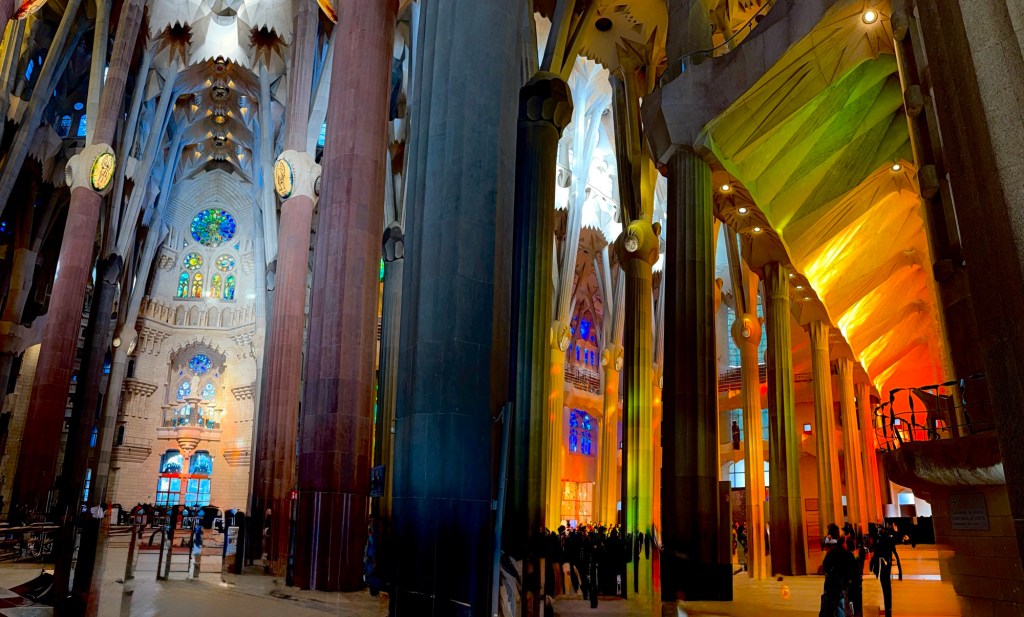
Two moods, one masterpiece — cool blues and fiery gold inside Sagrada Família.
And just like that, Gaudí is plucked from obscurity and thrust into a lifelong mission to envision and articulate a one-of-a-kind house of worship that is rooted in nature and majesty and uniquely creative. Gaudí’s love of the land and sea and sky is translated into a creation that defies description. His attention to light and detail is spectacular. While war and fires threatened to erase his vision, generations of artisans recreated and expanded upon his plans.
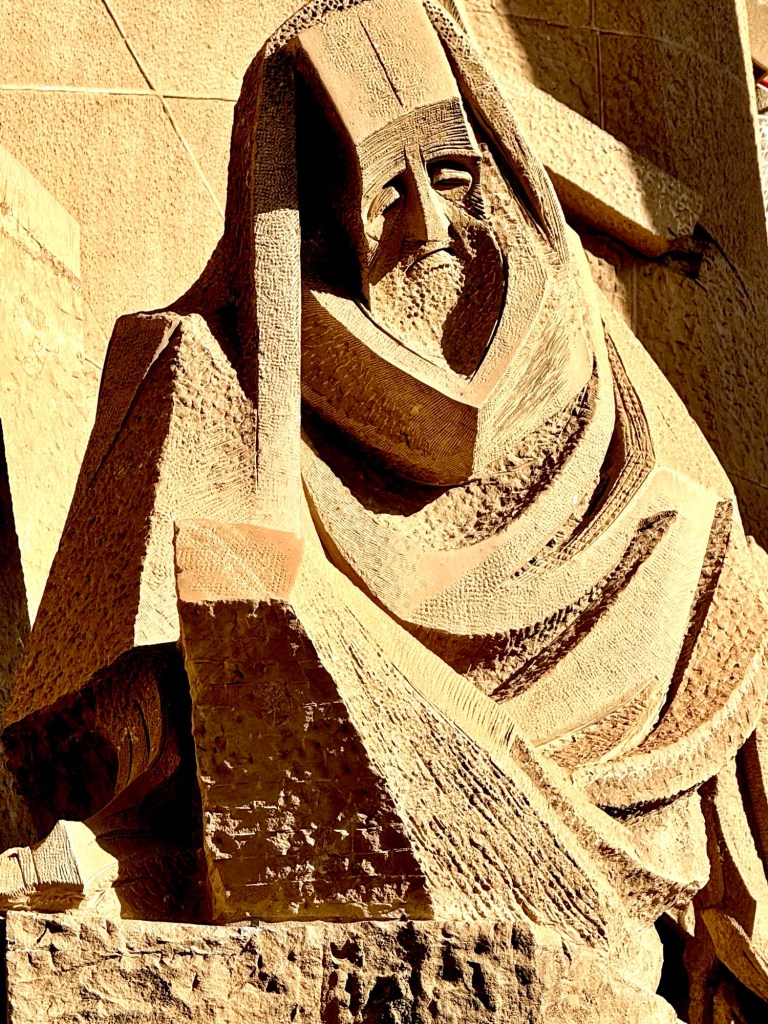
Stone carved with strength and solemn grace
This June, 100 years after the death of Gaudí, it will be finished (well, except for possibly 20% of the final tower, the never-ending upkeep of the thousands of carvings making up the façade, and the creation of the hundreds of bells — but otherwise finished!). A picture is worth a thousand words.
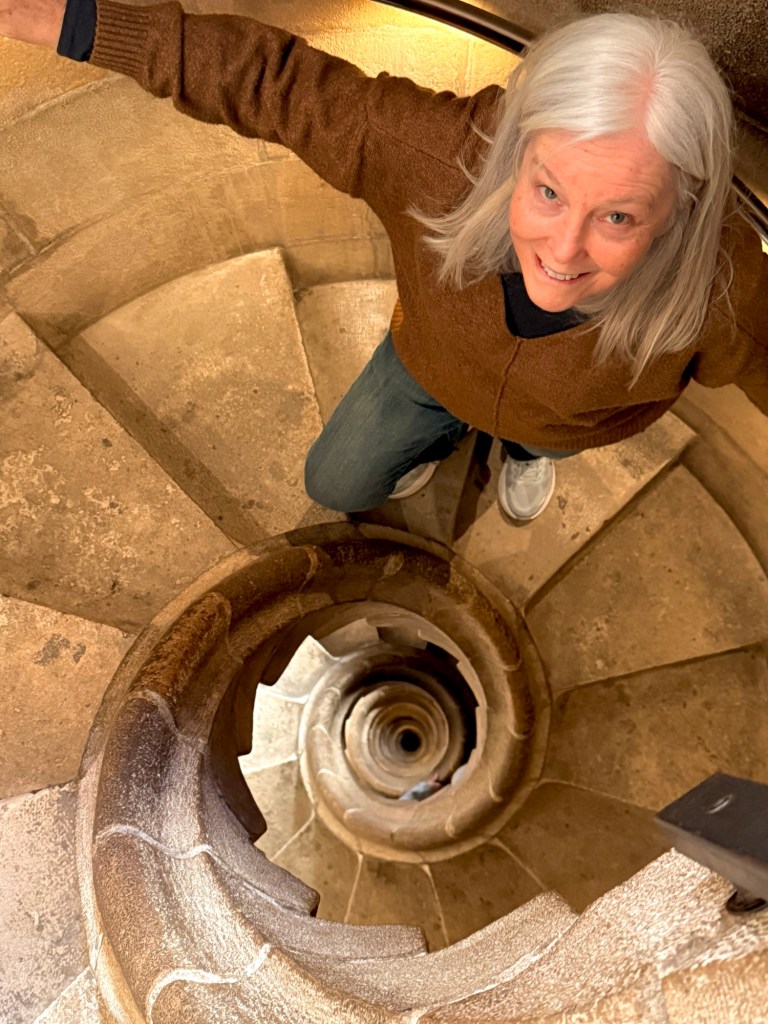
Down the spiral stairs of Sagrada Família tower — 400 steps later and our legs are officially more Gaudí than graceful.
As with any revolutionary, Gaudí influenced art, science, technology, and culture. While shepherding the basilica along, he also designed private homes (Casa Batlló among the most famous, a must-see) and a failed housing development that has become Güell Park (another distinctly Gaudí must-see).
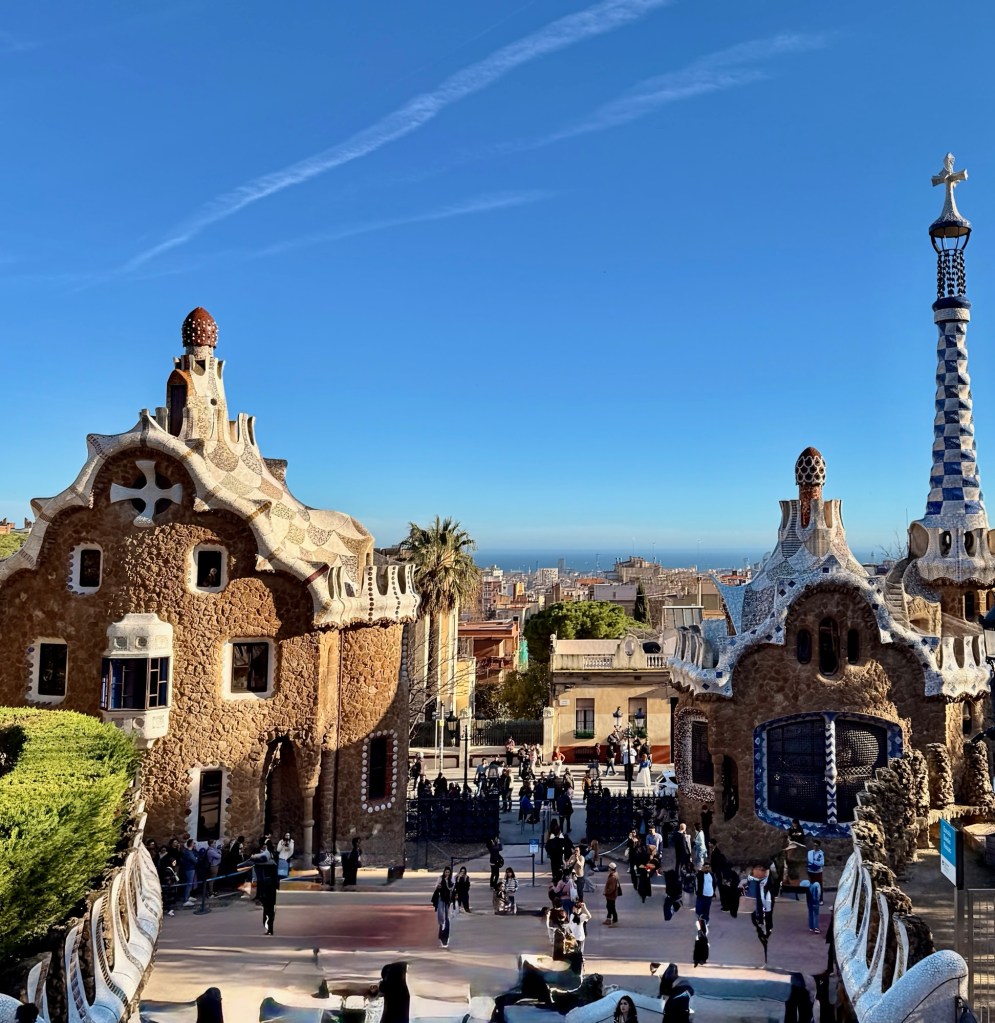
Fairy-tale rooftops and Barcelona views from Park Güell — where Gaudí let his imagination run wild.
His creative use of light, flow, and organic materials leaves no doubt of the genius behind it. His creations hover somewhere between Alice in Wonderland and Disney fantasy. His genius in harnessing wind and airflow, light and space, led to better living.
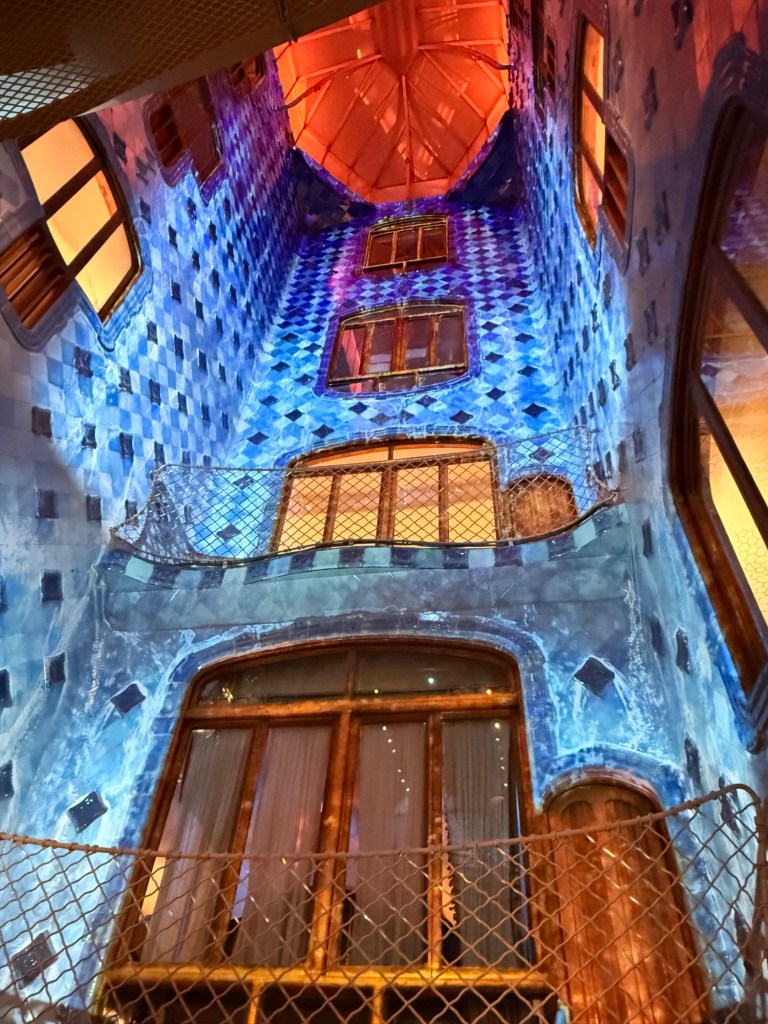
Diving into a dream of blue inside Casa Batlló — where walls ripple like the sea and imagination rules.
While Gaudí is an icon of Barcelona, he is by no means the solitary artist. Barcelona boasts the Picasso Museum, which was curated by one of Picasso’s best friends and offers a view of his progression from a 14-year-old greatly influenced by his father, an art teacher and artist in his own right, exhibiting his work
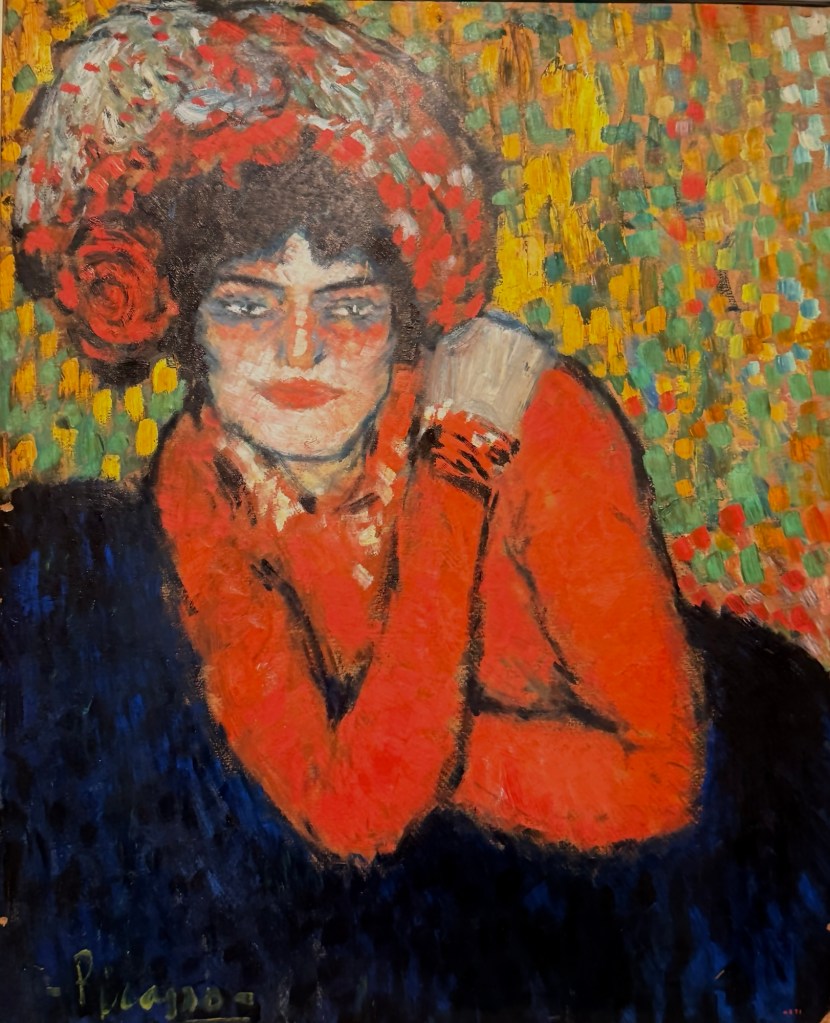
Bold color, soft gaze — a moment of quiet intensity by Pablo Picasso.
The First Communion (early Picasso — people looked like people, eyes and noses in their place, sans geometric shapes) at the Barcelona Exposition of Arts and Crafts (an amazingly skillful depiction), to a collection of his Blue Period following the suicide of his best friend, a fellow artist, to his time in Paris, to his pigeons in California, and on to his process of reimagining Velázquez’s Las Meninas. It is a valuable stop on a tour of Barcelona.
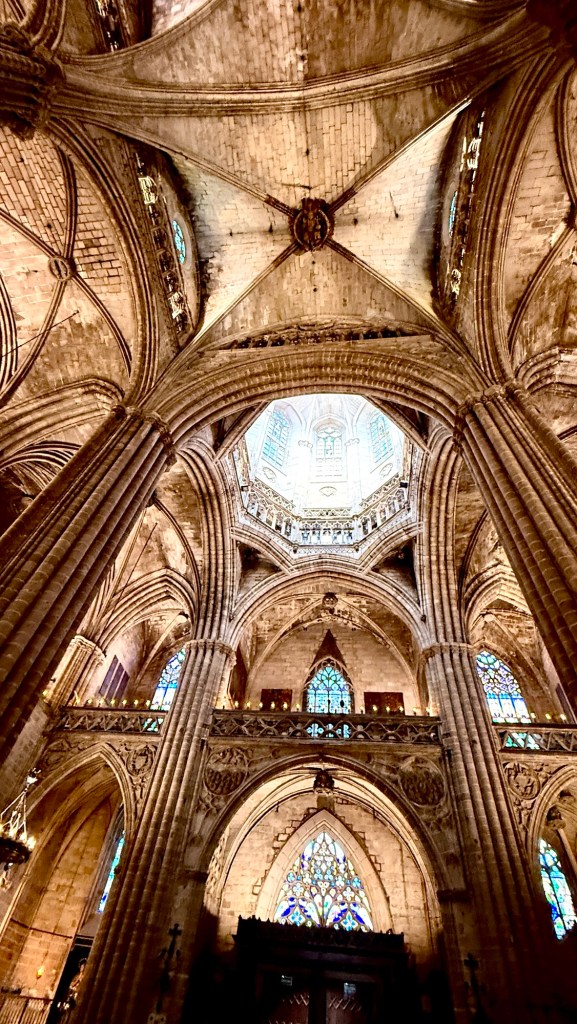
Centuries apart, yet reaching for the same heaven – Barcelona Cathedral (and Sagrada Família)
We were in Barcelona for Ash Wednesday, so we attended Mass at the Cathedral. It is a beautiful Gothic structure; however, the peaceful cloisters were a huge surprise. There, inside the gates, live 13 white geese to commemorate the martyrdom of St. Eulalia, the patron saint of Barcelona, at age 13.
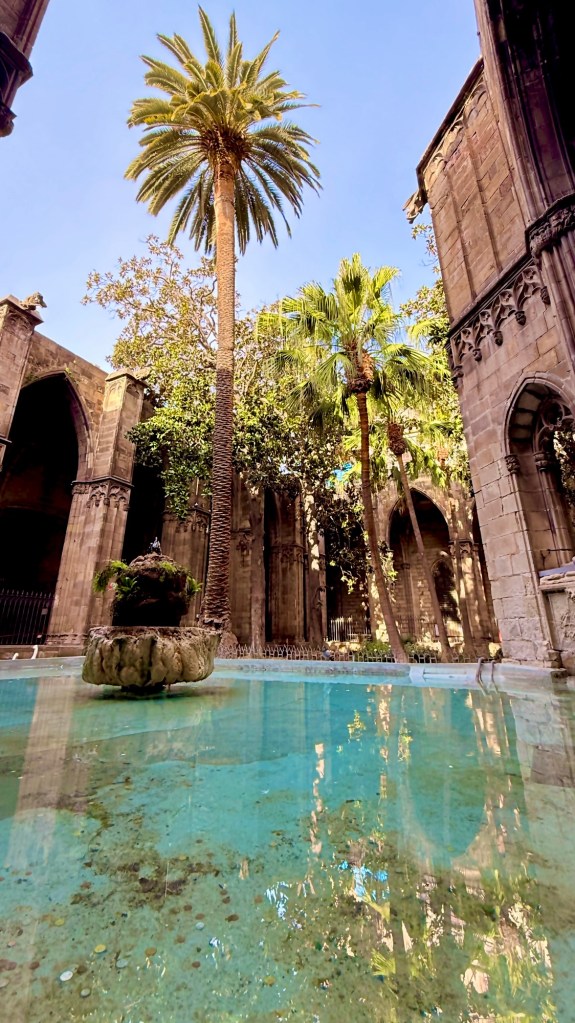
A quiet oasis of palms and reflection in the cloister of Barcelona Cathedral — where the city slows to a whisper.
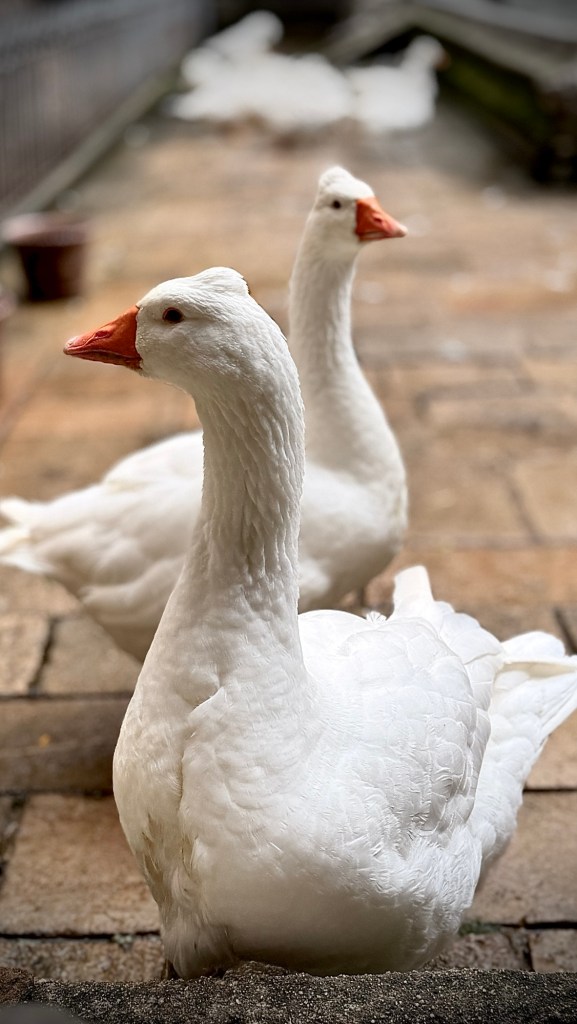
The famous 13 white geese standing watch in the cloister — a quiet tribute to Saint Eulàlia and centuries of tradition.
Lastly, no visit to Barcelona would be complete without an authentic tapas experience. Seated at the bar, you can take in the many small plates available while sampling the local Rioja or sangria. The anchovies, eggs, and fresh grilled vegetables, to name a few, are an exciting way to eat and learn about a place.
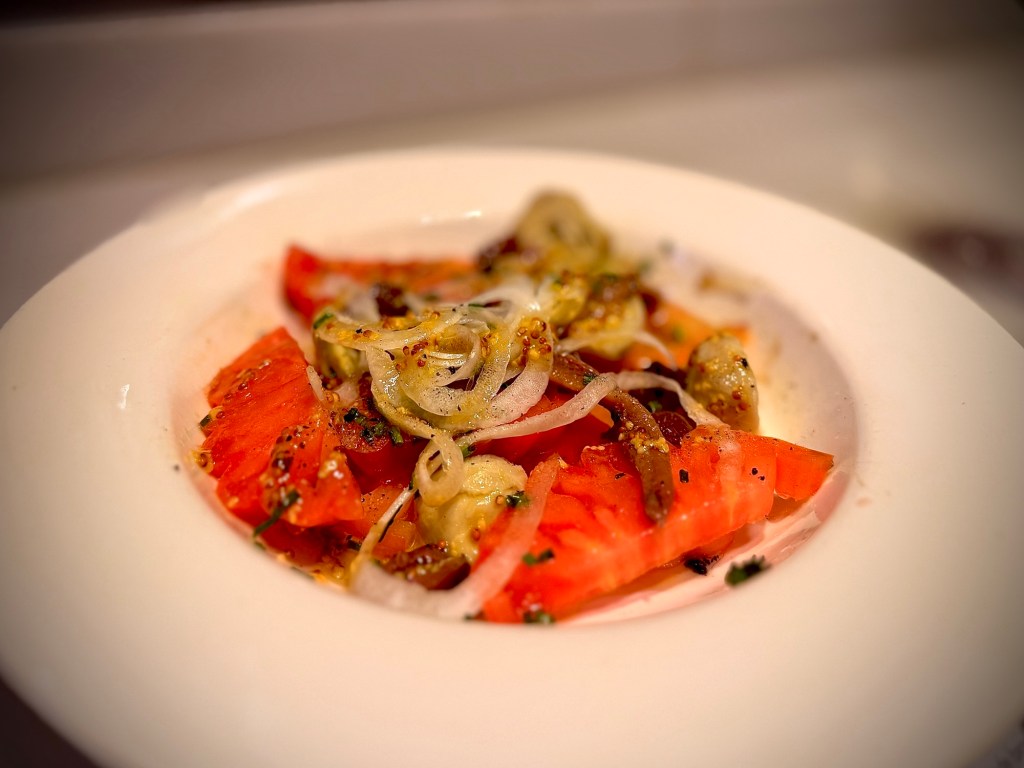
Bright tomatoes, briny anchovies, and a drizzle of olive oil — a little taste of the Mediterranean on one perfect tapa.
In the end, Barcelona lingers not simply as a destination but as an experience — a city where imagination rises in stone, faith echoes through cloisters, genius reshapes skylines, and conversation flows as freely as Rioja. It is a place where history and innovation coexist effortlessly, leaving visitors with the sense that they have stepped into a living work of art.

 Maureen and David’s Travel Blog
Glad you loved Barcelona. So much beauty to see and take in. Looking forward to hearing about your experience and impressions
LikeLike
Barcelona!! My heritage!! Enjoy!!Sent from my iPhone
LikeLiked by 1 person
Do you know th
LikeLike
Amazing pictures to document such history. Love seeing your travels.
LikeLiked by 1 person
We’re very happy for you both, having visited some of the highlights of Barcelona!
At the bottom of Las Ramblas, near the water, is the Maritime Museum – we hope you will have had a chance to visit that – wonderful exhibits oozing Mediterranean history!
Hugs,
Cathy and Frank
LikeLiked by 1 person
Staircase pic is pure genius. Great photography all around. Stations on Fri?
LikeLike
Thanks for the nice comments. Of the 400 steps down the tight spiraling stone staircase, only the second 200 had a hand railing… which made the first half especially memorable!
LikeLike